Pinole Aesthetic Dentistry Creating Beautiful Smiles

You bit into something hard, and now there’s a rough edge where your tooth used to be smooth. Examples include attending a Giants game in San Francisco or snacking at Point Pinole Regional Shoreline. Whatever the cause, tooth chipping is not as uncommon as many people realize; understanding what to do next can help you avoid further injury to the affected area.
Why Do Teeth Chip in the First Place
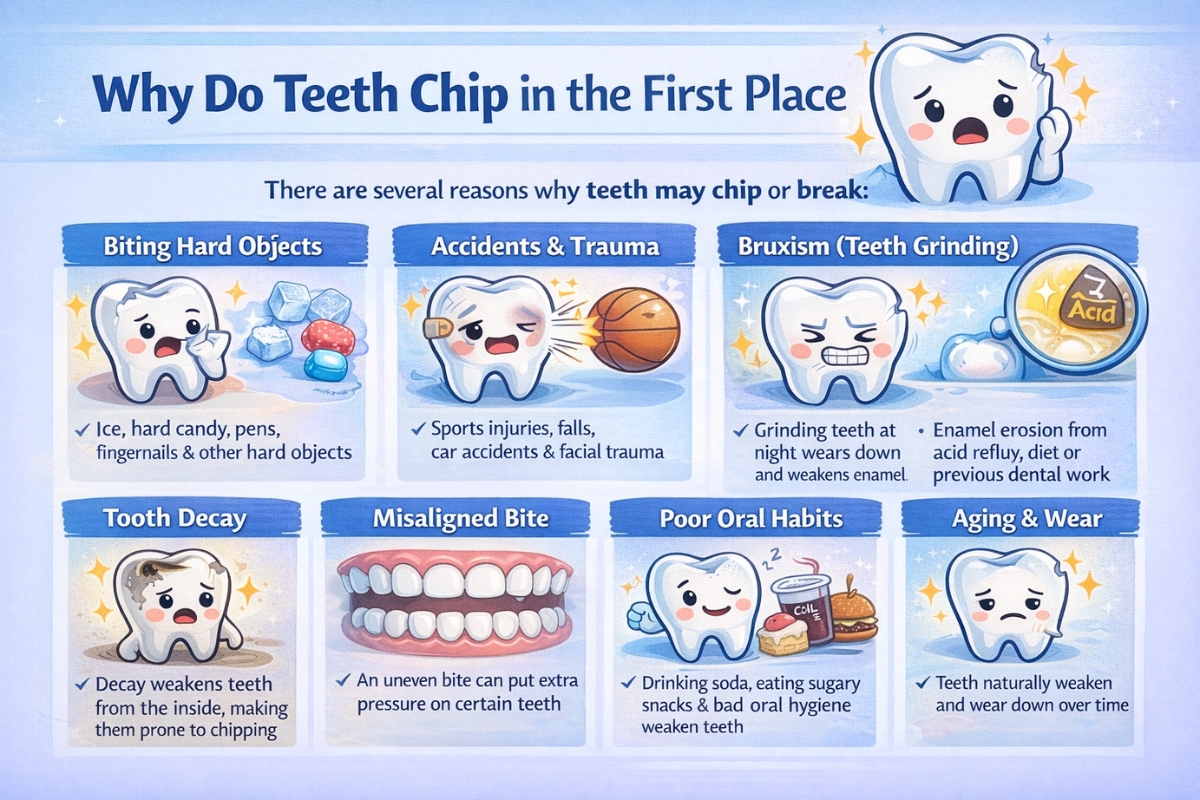
Teeth are strong, but they’re not unbreakable. A few of the most common chipped tooth causes include:
- Biting down on hard foods like ice, hard candy, or popcorn kernels
- Sports-related injuries, such as falling or being hit by an object
- Grinding your teeth (bruxism) during your sleep
- Weakened enamel from tooth decay or acid erosion
- Aging will naturally cause the enamel of your teeth to become thinner over time
Even a small chip from everyday habits can worsen if left untreated. That’s the part most people don’t expect.
What Happens If You Ignore It?
A lot of people think, “It’s tiny, it doesn’t hurt — I’ll deal with it later.” That’s understandable. But here’s what can happen when a chipped tooth goes unaddressed:
- The jagged edge can cut your tongue or inner cheek
- The chip can deepen, reaching the inner layer of the tooth (dentin), which causes sensitivity
- Bacteria can enter through the crack, increasing the risk of decay or infection
- In more serious cases, a fractured tooth repair becomes necessary rather than a simple fix
The earlier you address it, the simpler the treatment tends to be.
Treatment Options Based on How Bad the Chip Is
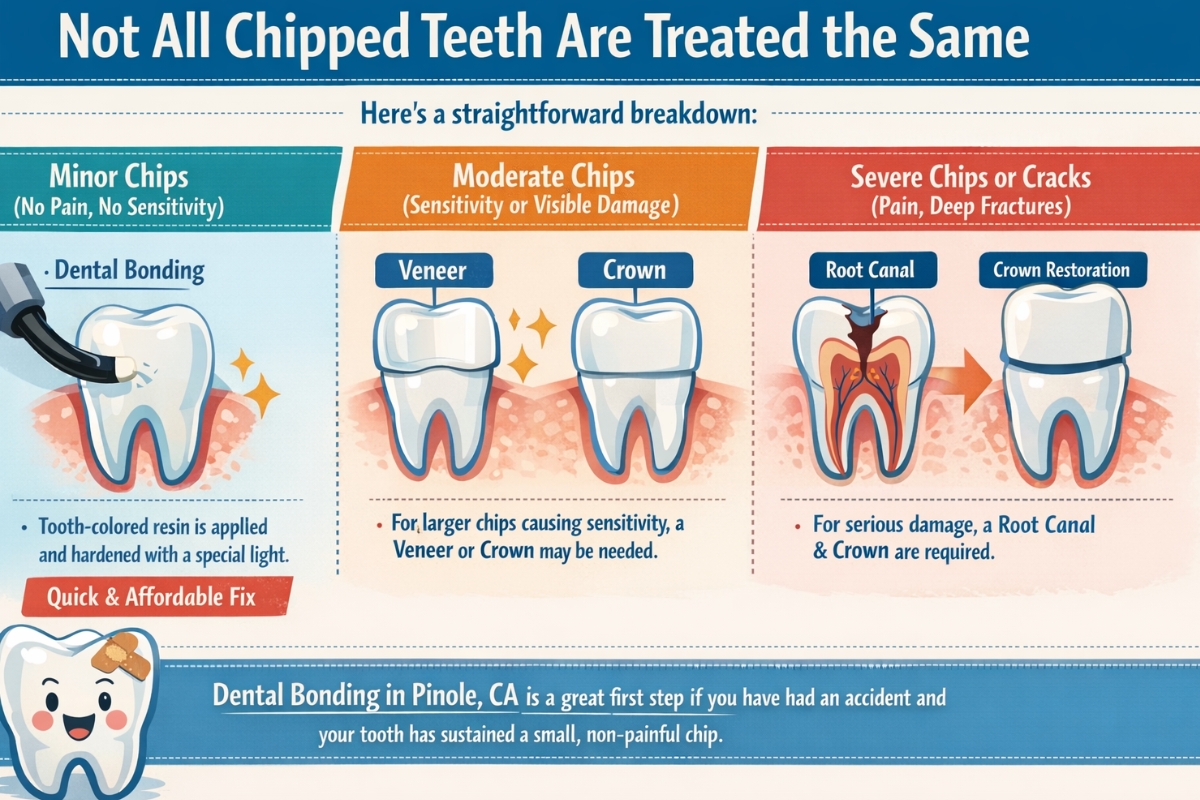
Not all chipped teeth are treated the same. Here’s a straightforward breakdown:
- Minor chips (no pain, no sensitivity): This is where dental bonding comes in. Tooth-colored resin is applied and sculpted to the chipped portion of the tooth and then hardened with a special dental light. This procedure can be completed in a single visit and can restore your tooth’s natural appearance. Bonding chipped teeth is one of the least invasive and least expensive ways to repair the problem.
- Moderate chips (sensitivity or visible damage): If your chip is more prominent, more visually noticeable, and causing sensitivity, a veneer or crown may be needed.
- Severe chips or cracks (pain, deep fractures): If your chip extends to the nerve, a root canal will be needed, followed by a crown. If your tooth is deeply cracked, it will affect more than just your appearance; it will also affect the health of the rest of your mouth.
Dental bonding in Pinole, CA, is a great first step if you have had an accident and your tooth has sustained a small, non-painful chip.
When Should You Actually Go to the Dentist?
If you’re saying, “I have a small chip in my tooth,” here’s a quick way to decide:
Go soon (within a few days) if:
- There’s sharp sensitivity to hot or cold
- The chip has a jagged edge, causing irritation
- You can feel the chip with your tongue consistently
Go right away if:
- There’s pain when biting
- The tooth feels loose or cracked
- There’s visible darkening near the chip
Even if there’s no pain, a dental check is still worth scheduling. Dentists can spot issues during an exam that aren’t yet visible or painful.
A Few Things That Help in the Meantime
If you can’t get to the dentist immediately:
- Rinse with warm salt water to reduce bacteria
- Avoid chewing on that side of your mouth
- Cover the edge with dental wax (available at most pharmacies) if it’s irritating your cheek or tongue
- Skip extremely hot, cold, or sugary foods that could irritate the exposed area
These are temporary steps — not replacements for professional care.
Chipped Tooth Repair: What to Expect at the Dentist
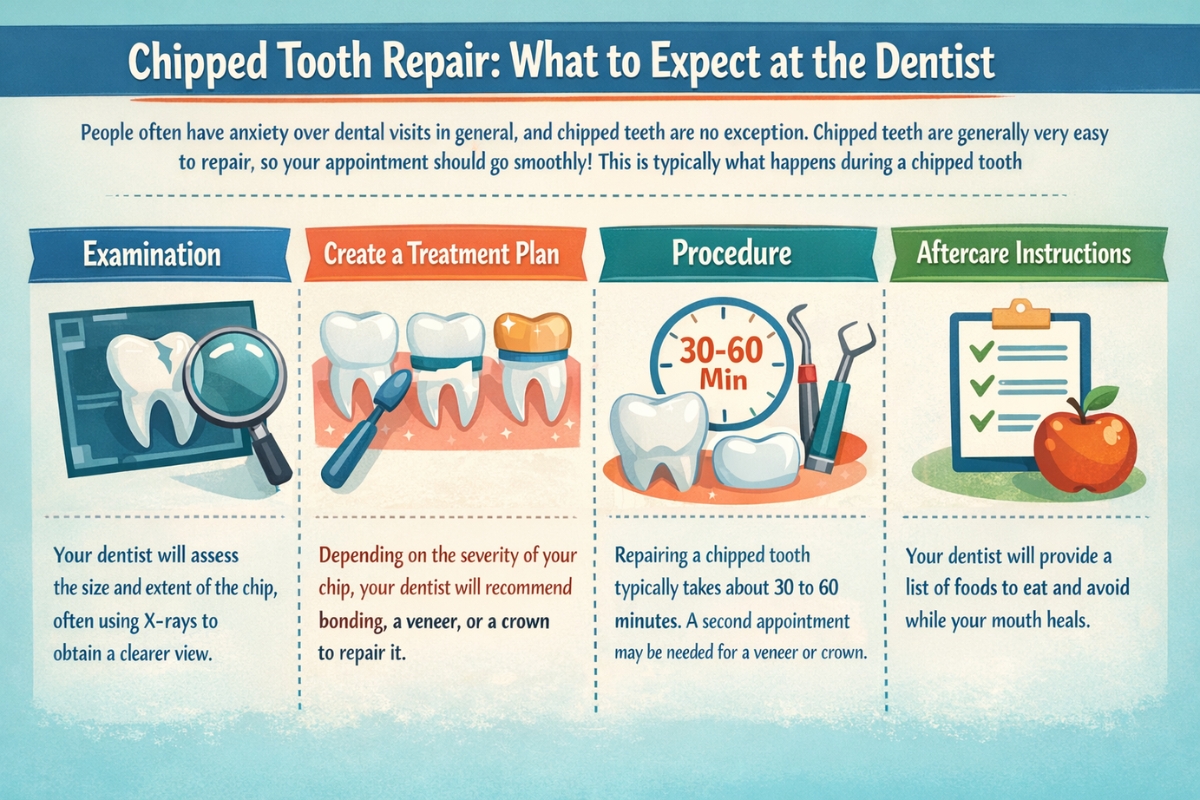
People often have anxiety over dental visits in general, and chipped teeth are no exception. Chipped teeth are generally very easy to repair, so your appointment should go smoothly! This is typically what happens during a chipped tooth repair appointment:
- Examination: Your dentist will assess the size and extent of the chip, often using X-rays to obtain a clearer view.
- Create a Treatment Plan: Depending on the severity of your chip, your dentist will recommend bonding, a veneer, or a crown to repair it.
- Procedure: Repairing a chipped tooth typically takes about 30 to 60 minutes to bond it, and a second appointment may be needed if you choose a veneer or a crown.
- Aftercare Instructions: Your dentist will provide a list of foods to eat and avoid while your mouth heals after the dental procedure.
Most patients can go home on the day of their appointment and feel that the issue has been resolved.
Your Next Step Starts Here
You do not have to live with your chipped tooth any longer than you want. Whether you have been wanting to address this as part of your cosmetic look, or it has bothered you for a while, and you would like to eliminate it, it is a good idea to have it evaluated.
At Pinole Aesthetic Dentistry, we serve patients in Pinole and surrounding communities with effective dental care, with no pressure to undergo extensive treatment. If you are ready to have your chip repaired and feel comfortable again, contact us to schedule an appointment today!
Common Questions People Ask
- Can a chipped tooth heal on its own?
No. Teeth don’t regenerate enamel. A chip will stay or worsen without treatment.
- Is bonding a chipped tooth permanent?
Dental bonding typically lasts 5–10 years with proper care before needing touch-ups.
- Does chipped tooth repair hurt?
Most repairs, especially bonding, are painless. Anesthesia is rarely needed unless the chip is deep.
- How much does it cost to fix a chipped tooth?
Costs vary — bonding is generally the most affordable option. Insurance may cover part of the cost if it’s functionally necessary.
- What if my chipped tooth has no pain?
It still warrants a dental visit. Painless chips can still lead to decay or worsen over time.